When the Fens Freeze: Winter Taxi Realities in Boston, Lincolnshire
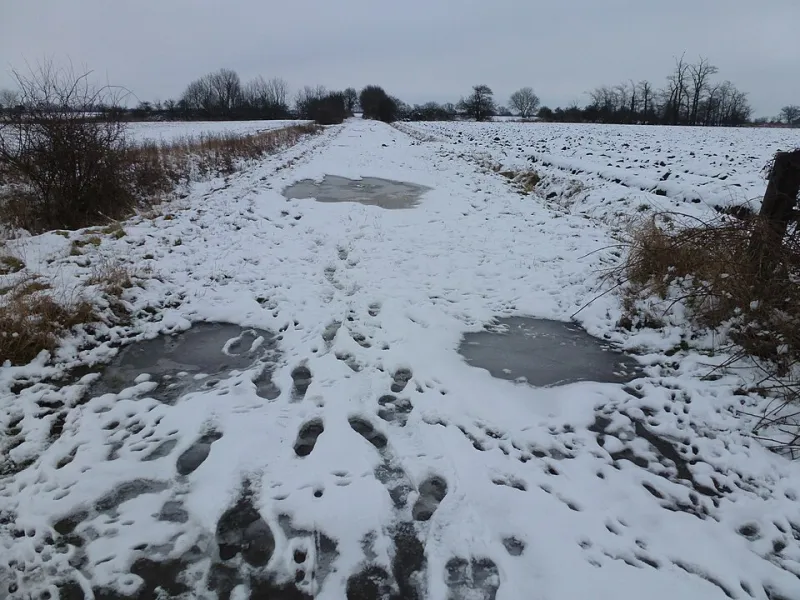
Photo: Richard Humphrey , CC BY-SA 2.0, via Wikimedia Commons
Boston doesn't do Alpine winters. What it does do is flat, exposed land, cold easterly winds and a handful of mornings where the fens turn white and the town centre pavements become a skating rink. When that happens in 2026, taxi services across Boston, Lincolnshire, feel it immediately — not just in the obvious ways.
Why a light dusting causes heavy disruption
On paper, a couple of centimetres of snow shouldn't stop a town. But Boston's road network spreads out fast. The A16, A17 and A52 are usually treated, but the lanes and residential streets off them — the routes to Wyberton, Fishtoft, Kirton and Swineshead — can stay slushy or icy for longer. Taxis that would normally nip through a back street may stick to main roads, which adds time and miles. Add a train arrival at Boston station or a clinic appointment at Pilgrim Hospital and you've got a queue of people all wanting the same handful of cars.
What happens to fares when the weather turns
First, the reassuring bit: hackney carriage fares in Boston are set by Boston Borough Council, and the meter is the meter. There's no official 'snow surcharge' that a driver can add because it's cold. If a hackney driver quotes a flat price instead of using the meter, ask why — and if you're not happy, don't get in.
Private hire is different. You book through an operator and agree a price in advance, so a quote can reflect demand, distance and the state of the roads. On a bad morning, a quote for a run out to a village may be higher than usual, or the operator may say they can't cover it at all. That's not necessarily sharp practice; it's a driver deciding whether a rural lane is worth the risk. Ask before you book, get the price confirmed, and check whether waiting time is included.
Availability: when the pinch points hit
The worst times are predictable. School runs between 7.30am and 9am, the 5pm to 7pm commute, Friday and Saturday nights, and any morning when the trains are disrupted. In snow, more people abandon buses and walking, so demand spikes while some drivers choose not to go out. The rank at Boston station and the town centre ranks can empty quickly.
If you need a cab for something fixed — a hospital appointment, a flight connection from a nearby airport, a shift start — book the day before, not 20 minutes before. Give the operator a landmark and a postcode, and confirm the pick-up point. 'Outside the Stump' means something different on a snowy Saturday than it does on a quiet Tuesday.
A safer ride in slippery conditions
Winter safety isn't only the driver's job. Wait inside if you can, rather than standing on an icy pavement. Check the vehicle looks roadworthy — lights on, windows clear, tyres not bald. Wear something you can walk in, because the last 50 metres to your door may be the slippiest part of the trip. Put your seatbelt on, and don't rush the driver. If the roads are genuinely bad, say so: a good driver will slow down, and a bad one shouldn't be pressured. Share your route with someone if you're travelling alone at night, and keep your phone charged.
Booking tips that make a difference
Book ahead where possible, especially for early mornings and rural pick-ups. Be flexible about the exact time — a 15-minute window is more realistic than a to-the-minute demand. Clear a safe pick-up spot if you can; a driver won't thank you for a driveway that's sheet ice. Have a backup plan: a bus route, a lift from a neighbour, or the option to stay put. And if the council has issued a warning and the lanes are untreated, ask yourself whether the journey is essential. A taxi is many things, but it isn't a snow plough.
The bottom line
Boston's winter taxi problems are usually short-lived, but they're real. Expect longer waits, fewer cars and quotes that reflect the conditions — not a meter that magically doubles. Book early, check the price, dress for the walk and don't take a risk with an unlicensed car just because the rank is empty. The Stump will still be there when the thaw comes.