Ramps, Tie-Downs and Straight Answers: Booking a Wheelchair-Accessible Taxi in Boston
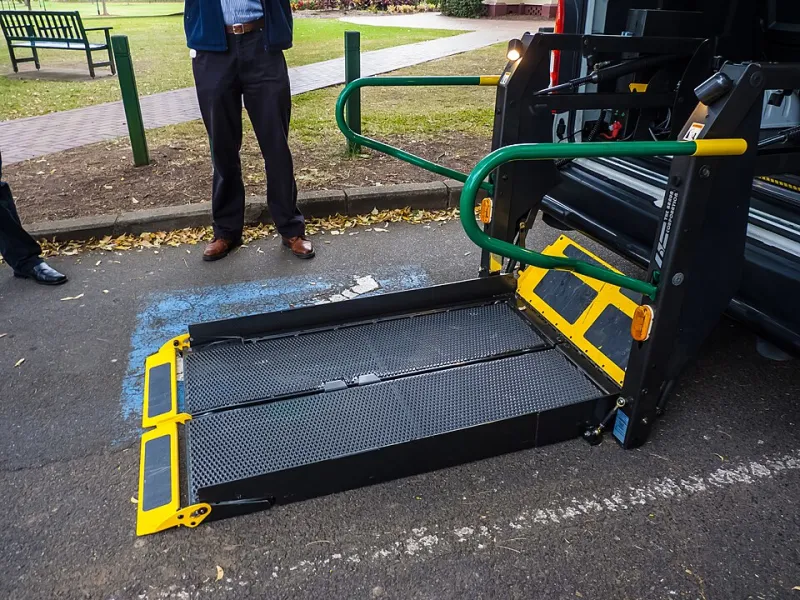
Photo: John Robert McPherson, CC BY-SA 4.0, via Wikimedia Commons
Most of the cars working the ranks in Boston are saloons and estates. That is fine for a run to the supermarket and useless if you are travelling in a wheelchair. Accessible vehicles are out there, but there are not many of them, and the difference between a smooth journey and a stressful one usually comes down to one thing: how well the booking was made.
This is a guide to making that booking properly.
Know what kind of vehicle you need
'Wheelchair accessible' covers a few different things, and operators sometimes use the phrase loosely. Broadly you will encounter:
- Rear-loading vehicles with a ramp. The most common arrangement in smaller towns, often a converted MPV or van. You board from the back and sit facing rearward, tied down. Ramps need space behind the car, which matters on a tight residential street.
- Side-loading vehicles with a lift. Usually purpose-built or larger conversions. Better where there is kerbside room and easier for some passengers, but rarer in Boston and worth asking about specifically.
- Wheelchair-accessible hackney carriages. The traditional black-cab style vehicle. Boston's hackney fleet includes accessible vehicles, and unlike private hire cars these can be hailed in the street or picked up at a rank.
One practical quirk: private hire vehicles must be pre-booked. You cannot flag one down, and that is a licensing rule rather than an operator being difficult. Hackney carriages are the ones you can wave at.
Ask these questions before you commit
The list looks long, but a good operator will answer it in two minutes flat — and their willingness to do so tells you plenty.
- What is the vehicle make and model, and is it ramp or lift access?
- What is the safe working weight for the ramp or lift?
- What are the internal dimensions — width, length and height at the doorway? Wheelchairs vary far more than people expect, and a powered chair with a high backrest is a different proposition to a lightweight manual one.
- Do I stay in my chair, or transfer to a seat? Both are fine, but they change what you need from the vehicle.
- How is the chair secured — a four-point strap system or an automatic locking system? Is there a separate headrest for the chair user?
- How many other seated passengers can travel, and does a carer or companion ride free?
- Is the driver expecting to assist, and are they trained to do so?
- Can I pay by card, and what is the cancellation policy if my appointment is rearranged?
Question six is the one people forget to ask and then argue about on the day. Companion fares are an operator-by-operator decision, not a legal right, so get it agreed up front.
Your rights, in plain English
Under the Equality Act 2010, drivers of designated wheelchair-accessible taxis and private hire vehicles have legal duties. They must carry you, they must not charge extra simply because you are a wheelchair user, and they must provide a reasonable level of assistance — helping with a ramp, for instance, or with a seatbelt. The same duties cover assistance dogs, and refusing a booking because of a wheelchair or an assistance dog is not a grey area.
A small number of drivers hold formal exemption certificates, which is a legitimate legal route and not something to be alarmed by. If you are refused and believe it was unlawful, note the vehicle registration and plate number and raise it with the licensing team at Boston Borough Council. Having the plate number turns a complaint into something they can actually act on.
How far ahead to book
Accessible vehicles are a limited resource, so treat booking as a diary task rather than an afterthought.
- Routine local trips: 24 to 48 hours' notice is a sensible minimum.
- Hospital and clinic appointments with fixed times: a week ahead, especially for early morning slots when the whole fleet is stretched.
- Weekends and evenings: book earlier than you think. Friday and Saturday nights are busy and accessible cars get taken first.
- Same day: not impossible. Ring as early as you can and be flexible on the pickup window rather than the destination.
If your plans change, ring and tell them. A released accessible vehicle is a gift to the next person who needs one.
Getting the trip itself right
Small bits of planning remove most of the friction.
For the town centre, ask to be dropped near the Market Place or at the edge of the pedestrianised streets rather than at an address the car cannot physically reach. Pescod Square and the surrounding shopping streets have accessible routes, but the driver needs to know which approach works best for you.
For the retail parks and supermarkets, arrange to be met at the entrance rather than the far end of a car park. Drivers will usually do this happily — it just has to be in the booking notes.
For Boston railway station, allow fifteen or twenty minutes beyond the drive itself. Getting from the forecourt to the platform takes longer than people budget for, and you do not want to be watching a train pull out. If you are heading onward by rail, ask for wheelchair assistance through the train operator in advance as well.
For hospital visits, mention the department and the entrance. The main entrance and the outpatient areas are not the same drop-off, and a driver who knows the site will save you a long push.
One last piece of advice
If an operator cannot answer basic questions about ramp weight limits or tie-down points, that is your answer — find another one. Boston has a handful of genuinely good accessible operators, and the ones worth your money are the ones who treat the questions as normal rather than as a nuisance.